
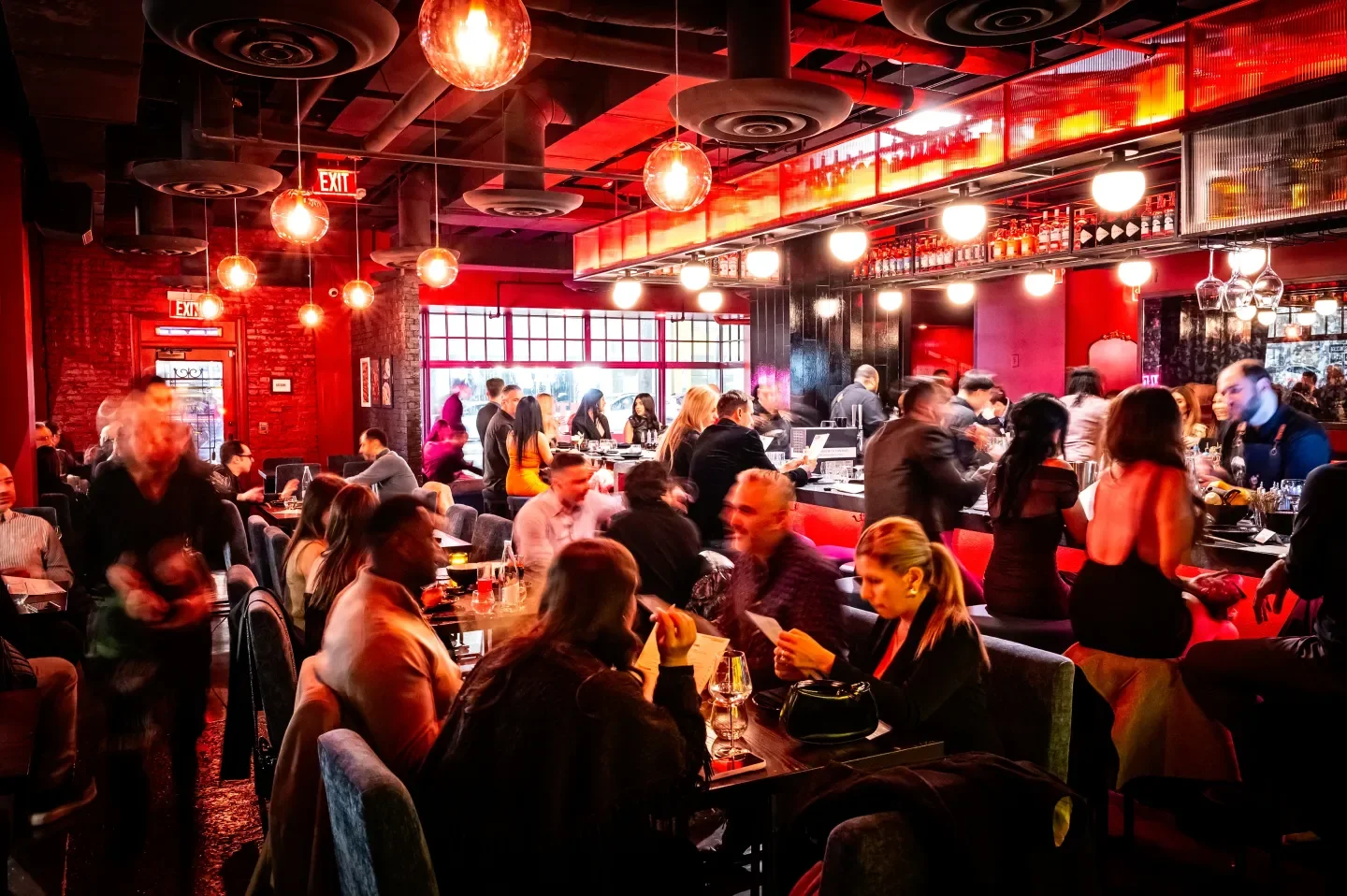
You can feel it pretty quickly now when a restaurant is off.
Not bad, exactly. That would almost be easier.
Bad is obvious. Bad is overcooked, understaffed, confused, forgettable. Bad announces itself right away. You know what happened. Or at least you know enough.
What’s more common now is something else. The polished kind of underwhelming. The expensive kind. The kind that looks like it should be good.
A new restaurant opens. The space looks good. The branding is competent. The menu has all the right signals. The prices suggest confidence, or seriousness, or both. There’s a nice glow in the room. The concept sounds polished when someone explains it to you.
Then the food comes.
And it’s fine.
Not cheap enough to feel casual. Not good enough to feel worth it. Not memorable enough to justify the price. By the end of the meal, you realize you didn’t really pay for excellence. You paid for overhead. You paid for ambition. You paid for a buildout, a rent structure, a lighting package, and a business model that needed your check to carry more weight than the experience itself ever could.
You leave feeling strangely overbilled and underwhelmed.
That feeling is everywhere now. And it usually gets blamed on the obvious things. Food costs. Labor costs. Inflation. Interest rates. The general brutality of the restaurant business.
All real. All relevant. All true.
Also a little too convenient.
Because a lot of restaurant problems don’t start in the kitchen. They don’t start in service. They don’t even start when the doors open.
They start much earlier, when the wrong concept gets placed in the wrong space, or the wrong operator takes on a space they were never actually prepared to run.
That is the mismatch.
And it explains more than people admit.
A lot of restaurants aren’t failing because the food is terrible or the service is broken or the chef lacks talent. They’re struggling because the entire thing was slightly miscast from the beginning. The concept doesn’t really belong in that building. The building doesn’t really support that operator. The rent structure demands one kind of business while the brand, neighborhood, or guest behavior supports another. The space looks like opportunity, but operates like gravity.
Most restaurant problems start with a mismatch.
Developers, landlords, hotel owners, and mixed-use teams often think they’re choosing a restaurant tenant. Operators often think they’re choosing a location.
That sounds reasonable. It’s also not really what’s happening.
What they’re actually choosing is a system.
A restaurant is not just a concept dropped into real estate. It’s a concept matched, or mismatched, to a box, a neighborhood, a cost structure, an ownership agenda, a guest profile, and an operating reality. When those things don’t line up, the problem usually shows up later wearing a more acceptable disguise. The food needs work. Service is inconsistent. The check average is too high. The room lacks energy. Sales aren’t where they need to be.
Sometimes all of that is true.
But often those are just the visible symptoms of an earlier mistake.
Too many restaurant deals fail because developers choose concepts for the wrong reasons, and operators choose spaces they aren’t prepared to run.
On the developer side, the contradiction is usually pretty clear once you say it out loud. They want the independent, magnetic, neighborhood-defining restaurant. The place with real energy, real point of view, real destination pull. But they also want a tenant with institutional-grade reliability. Strong credit. High rent tolerance. Full burden absorption. Predictable behavior. Minimal risk.
In other words, they want the upside of a authenticity with the security profile of a bank branch.
That overlap exists, but far less often than the market likes to pretend.
On the operator side, the mistake is different but just as common. Many aren’t actually bringing a business into a space. They’re bringing a concept, a talent, or an ambition. Which is not nothing. In restaurants, that part matters enormously. Places without creative conviction become interchangeable fast.
But a talent is not a business. An idea is not a company. A great dish is not a restaurant model.
Many chefs spend years becoming exceptional at creating food inside someone else’s system. That doesn’t automatically prepare them to build the system itself. And many financially minded operators understand controls, margins, and growth while missing the harder-to-measure things the whole business actually depends on, like quality, magnetism, atmosphere, care, and whether the place has any real center of gravity.
So one side often has concept without company. The other has company without concept.
Rarely do those two things come together cleanly. When they do, that’s when the magic becomes tangible.
And the space matters more than people want to admit, because a space is not just an opportunity. It’s an operating requirement disguised as an address. It comes with demands. On staffing, on management, on guest mix, on pricing, on energy, on daily execution. Operators often think they’re leasing a beautiful room in a promising location.
What they’re actually leasing is a much harder business than the one they had in mind.
That is why the best restaurant deals aren’t the most exciting on paper. They’re the ones with real alignment. The concept fits the place. The operator fits the burden. The economics leave room for quality. The neighborhood can actually sustain the idea. The building gets more than a tenant. It gets identity. And the restaurant gets more than an address. It gets a real chance.
Most of the time, that kind of alignment is treated as a nice bonus.
It should be the whole point.
Why Developers Keep Choosing the Wrong Restaurants
If this were just a taste problem, it would be easier to fix.
It would mean a few developers had bad instincts, a few owners liked generic concepts, and a few leasing teams simply needed better judgment. That would be manageable.
But that’s not really what’s happening.
The bigger issue is that many developers aren’t actually set up to choose great restaurant concepts in the first place.
They may say they want the right restaurant for the building. The right restaurant for the neighborhood. The right restaurant to give the project energy, identity, and real destination pull. And in many cases, they mean it.
But the process they use to get there is often built for something else entirely.
In a lot of new construction, especially mixed-use projects and hotel environments, restaurant space gets evaluated through the same machinery as everything else. Leasing strategy. Credit. Rent. Guarantees. Perceived risk. Speed to execution. Neat underwriting. Clean paper. A deal that can be explained easily, approved easily, and closed quickly.
None of that is irrational.
It’s just not how you end up with the most compelling restaurant.
Because the people best equipped to create a truly magnetic place are often not the people best equipped to look perfect in a leasing package. The chef with real point of view. The creative operator with taste, conviction, and the ability to build something people actually care about. The founder who understands quality and atmosphere deeply enough to create a place with gravity. Those are often not the same people who want to sign the most aggressive lease, absorb every extra cost, satisfy every institutional comfort requirement, and open inside a brand-new box that may still feel a little too polished, a little too sterile, or a little too detached from the kind of identity the concept actually needs.
So developers end up chasing a contradiction.
“Many developers say they want destination restaurants, but use a selection process designed to fill space, not create destinations.”
They want the independent, neighborhood-defining restaurant. But they want it wrapped in the risk profile of a bank branch.
They want authenticity, but with guarantees.
Character, but with clean covenants.
Destination energy, but without unpredictability.
That combination exists. It’s just rare.
And because it’s rare, the process usually filters out the very operators the project claims to want.
This gets compounded by who is often making the selection.
Many landlords, especially at scale, aren’t personally curating restaurant concepts with a long-term neighborhood-curation lens. They’re relying on outside leasing brokers, or internal leasing teams, or some mix of both. Which would be fine if those parties were primarily rewarded for creating long-term neighborhood value.
Usually they aren’t.
Usually they’re rewarded for getting the deal done.
That doesn’t make them bad at their jobs. It means their job is different. A broker gets paid when a lease gets signed. An internal leasing team is often measured on occupancy, paper rent, and execution. Even when everyone involved talks about vision, activation, placemaking, or any number of other overused buzzwords, the actual scorecard tends to favor transaction clarity over long-term coherence.
That distinction matters.
Because a destination restaurant is not just a tenant. It’s a value-creating layer of identity for the building and, many times, for the neighborhood around it. But if the selection process is optimized to close the lease instead of build that identity, the result is predictable. The real independents pass. The more financially legible groups stay in the process. A safer operator gets chosen. The space gets filled. The spreadsheet improves, temporarily.
But paper stability and actual alignment aren’t the same thing. A lot of these tenants struggle or fail within a few years because the original mismatch never went away. It just looked acceptable on paper.
And something important gets diluted.
The building gets a restaurant, but not necessarily a distinct perspective.
It gets food and beverage, but not always energy.
It gets occupancy, but not always magnetism.
It gets a tenant, but not always a destination.
And that has consequences beyond the restaurant itself.
When ground-floor restaurant space gets filled with concepts that could just as easily exist in any other new building in any other city, the project starts losing one of the few things restaurant space is uniquely capable of creating: specificity. The feeling that this place belongs here. That it adds something to the building. That it strengthens the neighborhood instead of just occupying square footage within it.
This is where a lot of developers quietly misread value.
They treat restaurant space as a leasing problem first and a value creation opportunity second. But the best restaurant tenants often create value that doesn’t show up neatly in the original lease negotiation. They make the project feel more alive. They give the building cultural credibility. They create repeated foot traffic, word of mouth, and identity. They make the residential, hotel, or mixed-use story more believable because they give people a reason to actually want to be there.
That kind of value compounds and eventually translates into a higher building value…
…but only if the concept is right.
And right now, too many developers are using a tenant selection process that is fundamentally better at finding signable restaurant deals than truly aligned ones.
That is one of the main reasons the mismatch keeps happening.
Why Operators Keep Choosing Spaces They Aren’t Prepared to Run
If developers often make restaurant decisions through the wrong process, operators often make them through the wrong lens.
They see the neighborhood. The corner. The architecture. The visibility. The possibility.
And sometimes that is exactly the problem.
A lot of operators, especially first-time founders or creative-led teams, aren’t really evaluating a space as a business system. They’re evaluating it as a stage for the concept they want to bring to life. They see what the place could look like, what it could feel like, what kind of crowd it could attract, what kind of identity it could project.
All of that matters.
It’s also not enough.
A lot of restaurant founders are not actually bringing a business into a space. They’re bringing a concept, a talent, or an ambition. And while those things are essential, they are not the same as operating readiness.
“A talent is not a business. An idea is not a company. A great dish is not a restaurant model.”
A chef may know how to build a menu, lead a kitchen, and create food people genuinely care about. A creative founder may know how to shape atmosphere, tone, and point of view. But if they’ve spent most of their career executing inside someone else’s structure, they may have had very little reason to build the structure itself. Which means they may not yet fully understand the operational burden of the thing they’re trying to create.
And that burden gets underestimated all the time.
Because the wrong space doesn’t just make the business harder. It quietly changes what kind of business it has to become.
A larger footprint means more labor, more management layers, more daily coordination, more fixed cost pressure, more need for consistency, more need for throughput, more need for systems that can hold under stress. A hotel restaurant brings its own version of this. More stakeholders. More expectations. More politics. More pressure to satisfy multiple audiences at once. Even a promising neighborhood retail space can become a bad decision if the guest base is wrong, the traffic pattern is misunderstood, the rent is too aggressive, or the broader direction of the neighborhood doesn’t actually support the kind of repeat customer the concept depends on.
This is where a lot of operators get seduced by potential.
They choose the room before fully understanding the machine the room requires.
The visibility looks exciting.
The address feels like validation.
The neighborhood seems to signal arrival.
The architecture makes the concept feel more real.
And all of that can distract from the harder questions.
Who is the actual repeat customer here?
Does this neighborhood really support this pricing?
Does this building owner understand what the concept needs to succeed?
Does the footprint match the team’s management depth?
Does the capital stack leave room for quality?
Will this space strengthen the concept, or slowly distort it?
Those are business questions, but they are also creative questions, because the wrong operating burden eventually shows up in the guest experience. It shows up in staffing. In energy. In quality drift. In menu compromise. In service inconsistency. In all the little erosions that happen when a concept is forced to carry more than it was built for.
That’s why so many operators mistake scale for progress.
They think they’re choosing a better opportunity when they may actually be choosing a more fragile version of the business.
And this problem has a mirror image too.
Just as many chefs and creative founders understand concept better than company, many financially oriented operators understand company better than concept. They know how to model the deal, control cost, and manage the numbers, but don’t fully understand what it takes to build the kind of place people become loyal to. Restaurants are not purely financial machines. They are experience businesses. Which means the numbers usually depend on things that don’t fit neatly inside a spreadsheet. Quality. Taste. Atmosphere. Energy. Care. Standards. Soul. Whether the place actually feels like it has a reason to exist.
One side often has concept without company. The other has company without concept.
Rarely do both show up together in a genuinely integrated way. When they do, that’s when the magic becomes tangible.
That’s also why the rare great place feels so different from the average new opening. Not because it followed some formula, but because the whole thing feels coherent. The quality is real. The energy is real. The concept belongs to the space. The space belongs to the neighborhood. The growth feels earned rather than overreached. Nothing about it feels like a founder trying to lease a bigger dream than the business can actually hold.
Because a space is not just an opportunity. It’s an operating requirement disguised as an address.
And too many operators realize that too late.
Why the Market Keeps Rewarding the Wrong Things
If this were only a story about bad judgment, the industry would correct itself faster.
It doesn’t, because the market is often set up to reward the wrong signals at the wrong time.
What gets rewarded early in a restaurant deal is usually not the same thing that creates long-term value later.
Early on, the market likes things that are legible. A recognizable name. A polished pitch. A tenant that looks strong on paper. A concept that photographs well in a deck. A lease that can be explained cleanly. A growth story that sounds ambitious. A project narrative that feels easy to sell.
Those things make everyone more comfortable.
“The market is very good at rewarding what is easy to explain before opening. It is much worse at rewarding what actually compounds after opening.”
They also create a dangerous illusion, because comfort at the deal stage and coherence in the real world are not the same thing.
A restaurant can look like a smart choice in underwriting and still be the wrong choice for the building. It can sound exciting in a leasing meeting and still fail to generate repeat demand. It can satisfy the paper requirements of the deal and still flatten the identity of the project. It can even open strong, get attention, and then slowly reveal that the original alignment was never really there.
That is part of what makes restaurant mismatch so persistent. It often doesn’t look like a mistake at first.
In the beginning, the space is leased. The press release goes out. The renderings look great. The opening gets attention. The project team can point to momentum. Everyone gets to feel, for a little while, that the right boxes were checked.
But restaurants do not live at the moment of lease execution. They live in repetition.
They live in the third visit.
The unplanned Tuesday night.
The guest who comes back with a friend.
The staff that stays.
The standards that hold.
The atmosphere that still feels right a year later.
The neighborhood relationship that deepens instead of fading.
That is where the real test begins.
And those are exactly the things the market is worst at valuing upfront.
Long-term restaurant value comes from factors that are harder to underwrite and harder to package. Taste. Discipline. Restraint. Operator maturity. Real neighborhood fit. An owner’s willingness to protect quality. A concept’s ability to generate loyalty instead of just curiosity. A building’s ability to support the business it claims to want. None of those fit neatly into the early story.
So the market defaults to what it can measure.
Paper rent.
Credit.
Visibility.
Opening buzz.
Ambition.
Deal certainty.
Those things matter.
They just don’t matter enough on their own.
This is why so many projects end up with restaurants that feel right in theory and wrong in practice. The market is very good at rewarding what is easy to explain before opening. It is much worse at rewarding what actually compounds after opening.
And that distinction matters far beyond the restaurant itself.
When the wrong restaurant goes into the wrong building, the cost is not limited to one tenant underperforming. The building loses a chance to become more specific. The street loses a potential source of energy. The neighborhood gets something more generic than it could have had. And the owner often ends up back in the market a few years later, solving the same problem again, usually after time, money, and momentum have already been lost.
This is the quiet absurdity at the center of a lot of restaurant leasing.
The market often says it wants places with identity, staying power, and destination pull.
But it repeatedly rewards the inputs that are best at producing the appearance of those things, not the reality.
That is why the mismatch keeps happening.
And it is also why alignment, when it does happen, feels so obvious in hindsight. The restaurant doesn’t just fill the space. It strengthens the building, supports the economics, fits the neighborhood, and gives people a reason to come back.
Not once.
Repeatedly.
What Alignment Actually Looks Like
So if mismatch is the problem, alignment is the standard.
Not perfection. Not certainty. Not some fantasy version of a restaurant deal where every variable behaves exactly as planned.
Alignment.
Because the best restaurant deals are not the most exciting on paper. They’re the ones where the essential parts actually belong together.
The concept belongs to the space.
The space belongs to the neighborhood.
The economics leave room for quality.
The operator fits the burden.
The ambition fits the business that actually exists, not the one everyone hopes will magically appear later.
That sounds obvious when written out this way. It is not how most restaurant decisions get made.
Too often, one strong trait gets mistaken for overall viability. A talented chef. A great corner. A beautiful buildout. A known operator. A hot neighborhood. A well-capitalized deal. Any one of those things can help. None of them are enough on their own.
Because a restaurant is never just one thing. It is a set of relationships that either reinforce each other or quietly pull against each other.
Concept alignment
What is this place actually offering, beyond a cuisine type or a design language? Why would people return once the novelty wears off? What is distinct about it, and is that distinctiveness deep enough to survive contact with real life? A restaurant doesn’t need to be complicated to be compelling. But it does need a real center of gravity. Something more durable than aesthetic competence or trend fluency.
Operator alignment
Does the team actually have the leadership, systems, discipline, and financial understanding to run this specific kind of business in this specific kind of space? Not in the abstract. Not eventually. Now. A strong operator is not just someone with taste or ambition. It is someone whose capabilities match the demands of the room, the lease, the staffing model, and the day-to-day burden of execution.
Spatial alignment
Does the box support the concept physically and emotionally, or distort it? Some spaces ask a restaurant to become louder, larger, more complex, or more expensive than it should be. Others quietly support the right rhythm, the right scale, the right atmosphere, and the right economics. The wrong space can put pressure on a concept until it stops being itself. The right space gives the concept the right rhythm, the right scale, the right atmosphere, and the right chance to be fully itself.
Context alignment
Does this restaurant actually belong in this neighborhood, this building, this hotel, this block, this phase of the area’s evolution? Not in a branding sense. In a lived sense. Do the guests make sense. Does the pricing make sense. Does the energy make sense. Does the concept strengthen the place around it, or does it feel like it was dropped in from somewhere else and left to explain itself?
Economic alignment
Can this business work repeatedly under real conditions? Not just on opening weekend. Not just if everything goes right. Can it work with this rent, this labor model, this capital structure, this check average, this level of repeat demand, and this amount of operational friction? Because quality is not just a creative matter. It is often a financial one. If the economics are too tight, the erosion starts early. Smaller compromises. Lower consistency. Less care. Less margin for standards. Eventually the guest feels what the pro forma ignored.
These categories are simple, but they change the way a restaurant deal looks once you start using them.
A promising restaurant is no longer just a cool concept with momentum behind it. It becomes a question: is this a coherent system, or just an exciting collection of parts?
That distinction is everything.
Because the best restaurant deals usually feel less flashy than the bad ones at the beginning. They may be less aggressive. Less overbuilt. Less optimized for the press release. Less dependent on the fantasy that one strong trait will compensate for five weak ones.
But over time, they separate themselves.
The quality holds.
The room still makes sense.
The neighborhood connection deepens.
The team grows into the business instead of getting crushed by it.
The building benefits from something real, not just occupied square footage.
That is what alignment looks like.
Not a perfect deal.
A coherent one.
When the Right Places Feel Different
You can usually feel alignment before you can explain it.
That’s part of what makes the best restaurants so compelling. They don’t just look right. They don’t just sound right. They don’t just check the usual boxes of design, concept, pricing, and buzz.
They feel alive.
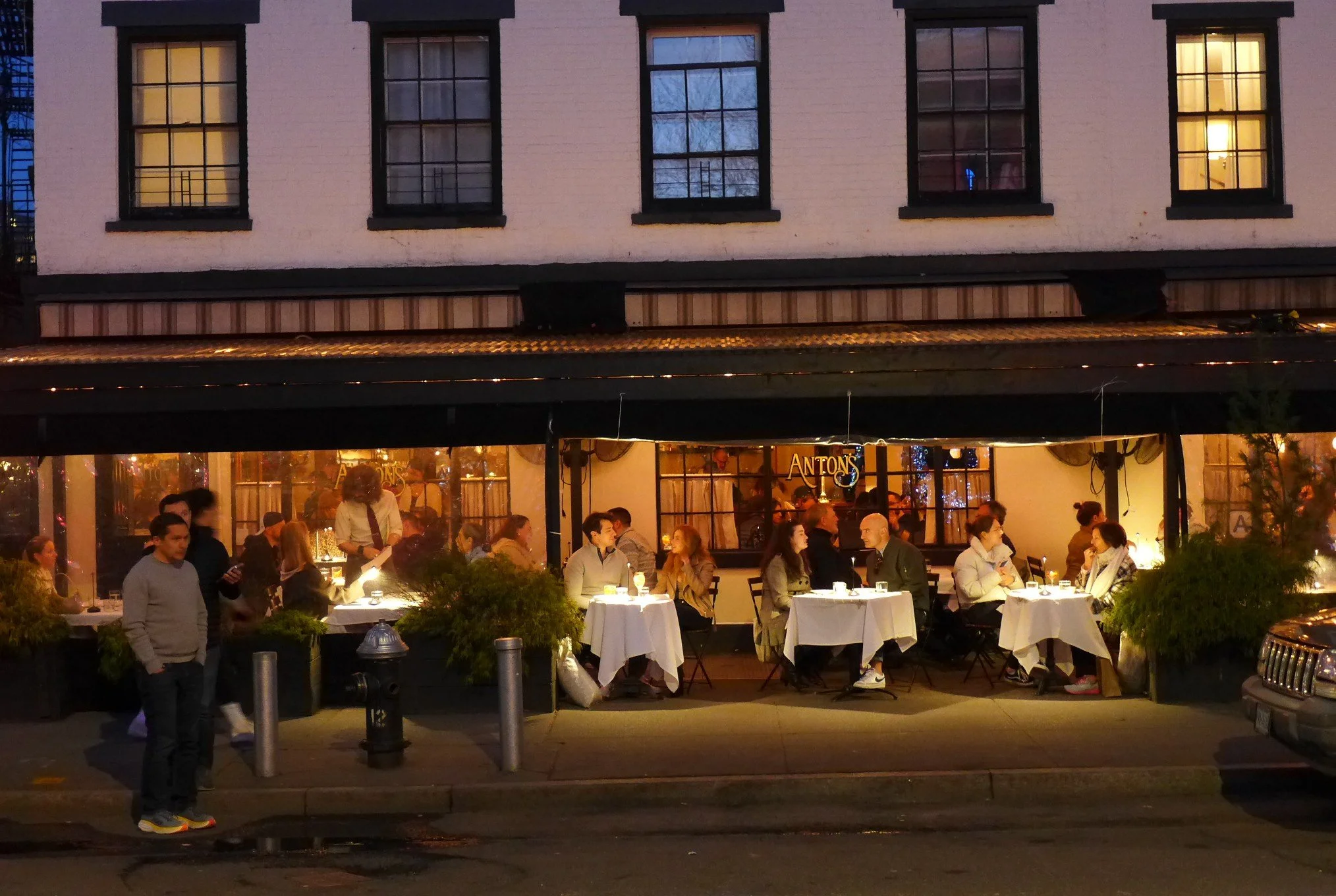
Anton’s West Village | https://www.antonsnyc.com/
The quality feels real.
The energy feels real.
The room feels right for the concept.
The concept feels right for the neighborhood.
The pricing makes sense for what’s being delivered.
The experience feels held together by something deeper than trend awareness or capital expenditure.
That difference is hard to fake.
And it’s also why the rare great place stands so far apart from the average new opening.
Not because it followed some formula. Not because it hired the right branding team or used the right materials or landed in the right zip code at the right time. But because the whole thing feels coherent. The food, the atmosphere, the rhythm, the service, the growth, the neighborhood relationship, the economics underneath it, all of it feels like it belongs to the same idea.
Nothing feels reverse-engineered.
Nothing feels like it was assembled from disconnected ambitions. Nothing feels like a founder trying to lease a bigger dream than the business can actually hold. Nothing feels like a developer trying to buy cultural credibility through square footage.
It just feels right.
And that kind of rightness matters more than people think, because guests may not use words like alignment or coherence, but they can absolutely feel when a place has them.
They feel it when a restaurant has a natural rhythm instead of a forced one. When the room carries the concept instead of compensating for it. When quality shows up in a way that feels structural, not performative. When the energy of the place comes from conviction, not choreography.
That’s what creates guest loyalty.
Not novelty by itself.
Not design by itself.
Not hype by itself.
Those things can attract attention. They can get people through the door once. They can help launch the story.
But loyalty usually comes from something deeper. The sense that the place knows exactly what it is. That it belongs where it is. That the people behind it understand what they are doing, what they are serving, and why the whole thing exists in the first place.
That is why the best places often age better than the average ones.
They don’t depend on a moment. They depend on a center of gravity.
And that center of gravity is usually visible in the details. In the consistency. In the pacing. In the standards. In the restraint. In the way growth happens only when the business can actually carry it. In the way the experience keeps its soul even as the operation gets more complex. In the way the place earns repetition instead of constantly trying to manufacture excitement or discount its way back into relevance.
That is what alignment looks like once it becomes tangible.
Not theoretical fit.
Energetically fit.
The kind that makes a place seem inevitable in retrospect, as if it could only have been this restaurant, in this kind of space, run this way.
Those places are rare.
But when they happen, they don’t just fill a space well. They raise the value of everything around them.
They give a building identity.
They give a neighborhood energy.
They give people a reason to return.
And they remind you that a restaurant can still feel like more than a concept squeezed into a lease.
It can feel like it belongs.
What Great Restaurant Deals Actually Require
For developers, this should change the question.
Not just who can lease this space?
Not just who has credit?
Not just who can make the underwriting clean enough to get comfortable?
The better question is: who actually belongs here in a way that can create long-term value?
Because restaurant space is not just another line item in the leasing plan. At its best, it is one of the few parts of a building that can shape identity in public. It can change how the project feels. It can strengthen the neighborhood around it. It can create energy that spills beyond the walls of the space itself. And when the concept is right, that value compounds in ways that rarely show up in the original deal memo.
But only if the alignment is real.
A safer-looking tenant is not always the safer long-term bet. A more legible deal is not always the more valuable one. And a restaurant that satisfies the paper requirements of the lease but weakens the character of the project may be doing more damage than the initial underwriting ever captures.
For operators, the lesson is just as important.
A bigger room is not always a better opportunity. A more visible location is not always a more coherent one. A more ambitious deal is not always a smarter next step.
Because the wrong space doesn’t just increase the pressure on a restaurant. It changes the restaurant. It changes what the business has to carry, what the team has to manage, what the guest expects, and what the concept has to become in order to survive. And if that burden outruns the actual readiness of the operator, the result is usually predictable. Drift. Compromise. Erosion. A place that slowly becomes less like the thing it was supposed to be.
That is the cost of mismatch.
And it shows up everywhere.
In buildings that never quite develop the identity they were aiming for.
In neighborhoods filled with polished restaurants that could be anywhere.
In operators stretched thin by rooms that asked for more than the business could honestly support.
In guests paying more and getting less.
In places that open with momentum and fade into promotional cycles, inconsistency, or closure a few years later.
That pattern is not inevitable.
But changing it requires a different standard.
Not more hype.
Not more caution.
Not more polished leasing language.
Not bigger ambition for its own sake.
Better alignment.
Between concept and space.
Between operator and burden.
Between economics and quality.
Between restaurant and neighborhood.
Between what the deal promises and what the business can actually sustain.
Because the best restaurant deals aren’t the ones that look the safest in the beginning.
They’re the ones that make the most sense over time.
The ones where the building gets more than rent.
The operator gets more than an address.
The neighborhood gets more than another place to eat.
It gets a place with staying power.
And that usually starts the same way everything else in this business does:
By getting the alignment right before the doors ever open.